Call for specialist advice
Dominica
Dominica is the youngest island in the Lesser Antilles, still being formed by geothermal activity and similarly new to travellers, remaining untouched by mass tourism. Despite its unsung status, it offers far more than its size would suggest, packing an immense amount of natural and cultural beauty into less than 300 square miles, making it smaller than New York City.
Nicknamed the “Nature Island of the Caribbean”, it is a perfect destination to reconnect with the natural world. Its luscious tropical rainforests, rugged topography and dramatic volcanic beaches make for some striking sights and an ideal habitat for many species such as the Sisserou Parrot – the national bird, endemic to the island.
In addition to its national parks and natural landmarks, Dominica is known as a world-class diving and snorkelling location. Its volcanic underwater landscapes are home to 200-300 resident sperm whales, making it the only country in the world where they can be seen year-round; they reside along the Western coast, utilising underwater canyons as a nursery for their calves.
The volcanic landscape of the island creates numerous hot springs, including the ‘boiling lake’ at Morne Trois Pitons National Park, which is the second largest hot springs in the world, which reaches temperatures far too high to swim in. The volcanic nature of the island brings originality to its diving experience – you can snorkel Champagne Reef, where bubbles are released through volcanic vents to create a fizzy effect underwater.
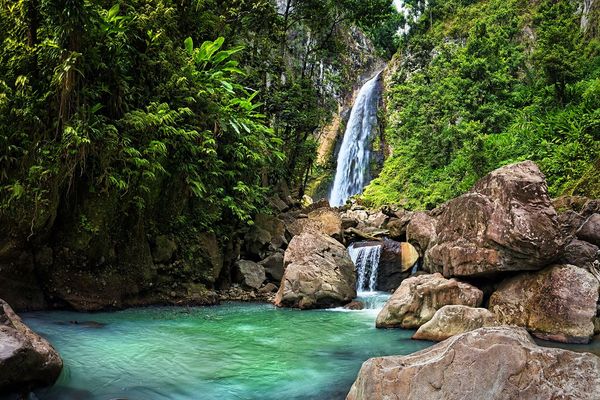
Dominica has 365 rivers, including ‘Indian River’, the widest river on the island and one of its many famous sites used to film Pirates of the Caribbean: Dead Man’s Chest. The plethora of rivers coincides with the many waterfalls and gorges that can be accessed by hikes that vary in challenge but stay consistently stunning.
The Kalinago people of Dominica are the largest remaining indigenous community in the Caribbean, with about 3,500 Kalinago living on the east coast of the island. The Kalinago maintain their traditional ways of life – they are subsistence farmers who mainly cultivate cassava and are skilled crafters. They are deeply connected to the island's natural resources and are known for their deep-rooted traditional ecological knowledge.
Dominica’s dry season spans from December to May, meaning that in these months, the humidity is lower, jungle trails are most passable and scuba diving visibility is at its peak. The wet season is still warm, but with heavy downpours and the potential for storms. The island is lush and green at this point, and it’s quietest in terms of tourism.
For a tailored itinerary and quote please send us an Enquiry Form or call us on 020 8274 8510.
Dominica Holidays
All itineraries can be tailored and alternative hotels suggested, click below for ideas and contact us for your own bespoke itinerary




Registered Office: Naturally Travels Limited, Bridge House, 11 Creek Road, East Molesey, KT8 9BE, Registered No. 06205924